Algorithmic trading classes in Fresno, California

Learn to build the system before you risk the trade.

Thinking about trading? Before chasing signals or reacting to every market move, learn how to turn an idea into rules, test those rules, and build a bot that can follow them without fear, hesitation, or impulse.

  • Turn a trading idea into clear, testable rules
  • Backtest before putting real money at risk
  • Build discipline directly into execution
  • No prior coding experience required
Why trading bots?
Students collaborating around a laptop during an algorithmic trading class
Hands-on, small-group instruction

Build it in class. Understand every part.

Bring your laptop and build alongside the instructor. You will turn a trading idea into rules, validate those rules, connect real-time data, and assemble a brokerage-connected system designed to execute and manage orders.

12 students maximumGuided laptop buildNo coding experience required
Free introductory course

Algorithmic trading: the pros, the cons, and why now.

You do not need to buy a course or risk real money to decide whether algorithmic trading belongs in your future. Start with a clear introduction to what these systems can do, what they cannot do, and what building one responsibly actually requires.

WHY START NOW?

The best time to learn the process is before you feel pressure to trade.

Markets will keep moving, technology will keep improving, and the perfect entry point will never announce itself.

Starting now gives you time to learn, test, question assumptions, and build discipline before capital is at risk.

THE PROSConsistency, testing, and scale

Algorithms can follow written rules without fear or fatigue, test ideas across historical data, monitor more markets, and record every decision.

THE CONSBad rules still produce bad results

Weak assumptions, poor data, costs, overfitting, software errors, and changing markets can all cause failure. Automation does not remove risk.

YOUR NEXT STEPDecide from understanding

See the tools, time, costs, skills, and safeguards involved. Continue into Phase 1 only if the process fits your goals.

Curriculum

Four phases

Each class covers one part of the process. The phases can be booked separately and completed on available class dates.

PHASE 01

Foundation and brokerage fit

Set up the tools, understand the system, and compare brokerages based on how easily they provide live prices and support automated orders.

  • Using AI for development
  • Development environment
  • Schwab, Interactive Brokers, and brokerage connections
PHASE 02

Strategy and testing

Turn a trading idea into specific rules and test those rules with historical data.

  • Indicators and entry rules
  • Data cleaning and backtesting
  • Trading costs and testing errors
PHASE 03

Live data and execution testing

Connect the strategy to live market prices and validate signals, orders, fills, positions, and risk controls in paper trading.

  • Live market prices from your brokerage
  • Orders and fills
  • Position and risk controls
PHASE 04

Automated execution and monitoring

Complete the brokerage-connected execution workflow and learn how to operate, monitor, and stop the system safely.

  • Order routing, monitoring, and kill switches
  • Local or cloud deployment
  • Maintenance and controlled live activation
The course experience

One system that develops across all four phases.

Each class continues the work from the previous phase. Students prepare before class, build during the session, save their work, and return for the next part of the system.

  1. 01
    Before class

    Prepare your workspace

    Use the student portal to review your next phase and class date, then arrive with your laptop and required account access.

  2. 02
    During class

    Build alongside the instructor

    Work on your own laptop while each decision, connection, and line of logic is explained.

  3. 03
    Between phases

    Keep the work you completed

    Your code, notes, test results, and next steps remain part of the same project as you move forward.

  4. 04
    Final phase

    Complete the execution workflow

    Demonstrate how live market data, strategy logic, brokerage orders, positions, risk controls, and monitoring work together. Paper trading is the required validation stage before controlled live activation.

Choose your starting point

Start with one class. Keep building when you are ready.

Now that you know why the system matters and what you will build, choose the phase that fits where you are. You do not have to commit to the full program before experiencing the class.

01Build on your own laptop

Follow the instructor while every major decision and connection is explained.

02Keep what you create

Your code, notes, and test results stay with you as the system develops.

03Continue at your pace

Book one phase first, then return when you are ready for the next part.

Why algorithms

Why use an algorithm instead of trading manually?

Frequent manual trading has produced poor results for most participants in several large studies. A well-designed algorithm cannot create a profitable strategy by itself, but it can remove inconsistent execution, test the same rules over large datasets, and follow the plan without fatigue or hesitation.

THE HUMAN PROBLEM

Emotion can make or break a trader.

Most people cannot afford an unlimited financial and emotional learning curve while trying to become consistent at manual trading.

Algorithms are not instantly profitable. They are instantly consistent. Once the rules are defined, the system can follow them from its first trade without fear, hesitation, revenge trading, or fatigue.

11.4% vs. 17.9%

The most active U.S. households earned 11.4% annually while the market returned 17.9% during the study period.

Study: Barber & Odean
Lower execution costs

An SEC review found that most academic studies associate algorithmic trading with improved market quality and reduced transaction costs under normal conditions.

SEC report on algorithmic trading
Manual trading
Algorithmic trading

Decisions can change

Fear, excitement, fatigue, and hesitation can affect when a person enters or exits a trade.

Rules stay consistent

The system follows the entry, exit, sizing, and risk rules that you defined.

Testing is limited

It is difficult to judge a strategy from memory or from a small number of trades.

Rules can be tested

You can apply the same rules to historical data and review the results before paper trading.

Requires screen time

A person must watch the market, identify the setup, place the order, and manage the position.

Can monitor continuously

The program can watch multiple symbols and respond when its conditions are met.

Records may be incomplete

Manual notes often miss the full context behind each decision.

Every action can be recorded

Signals, orders, errors, and results can be logged for review and improvement.

Expected outcome

Leave with a fully executable system.

The goal is a system that can receive live market prices, generate signals, send and manage brokerage orders, track positions, and apply defined risk controls.

Paper trading is part of the validation process, not the final destination. We will help students compare brokerages for live market data and automated order access, then work toward a brokerage-connected execution system. Final live activation depends on the student’s brokerage account, approved access, private credentials, and successful testing.
01 A written trading strategy with clear rules
02 Historical testing and paper-trading validation
03 A connection to live market prices
04 Brokerage-connected order execution and monitoring
Who can attend

All ages, skill levels, and backgrounds are welcome.

You do not need a coding or finance background. Students, business owners, working professionals, career changers, and experienced traders can all benefit from learning how to build their own systems.

The system you build can support a side business while you run a company, work, or finish school. You can also use the course as a foundation if your goal is to pursue automated trading full time.

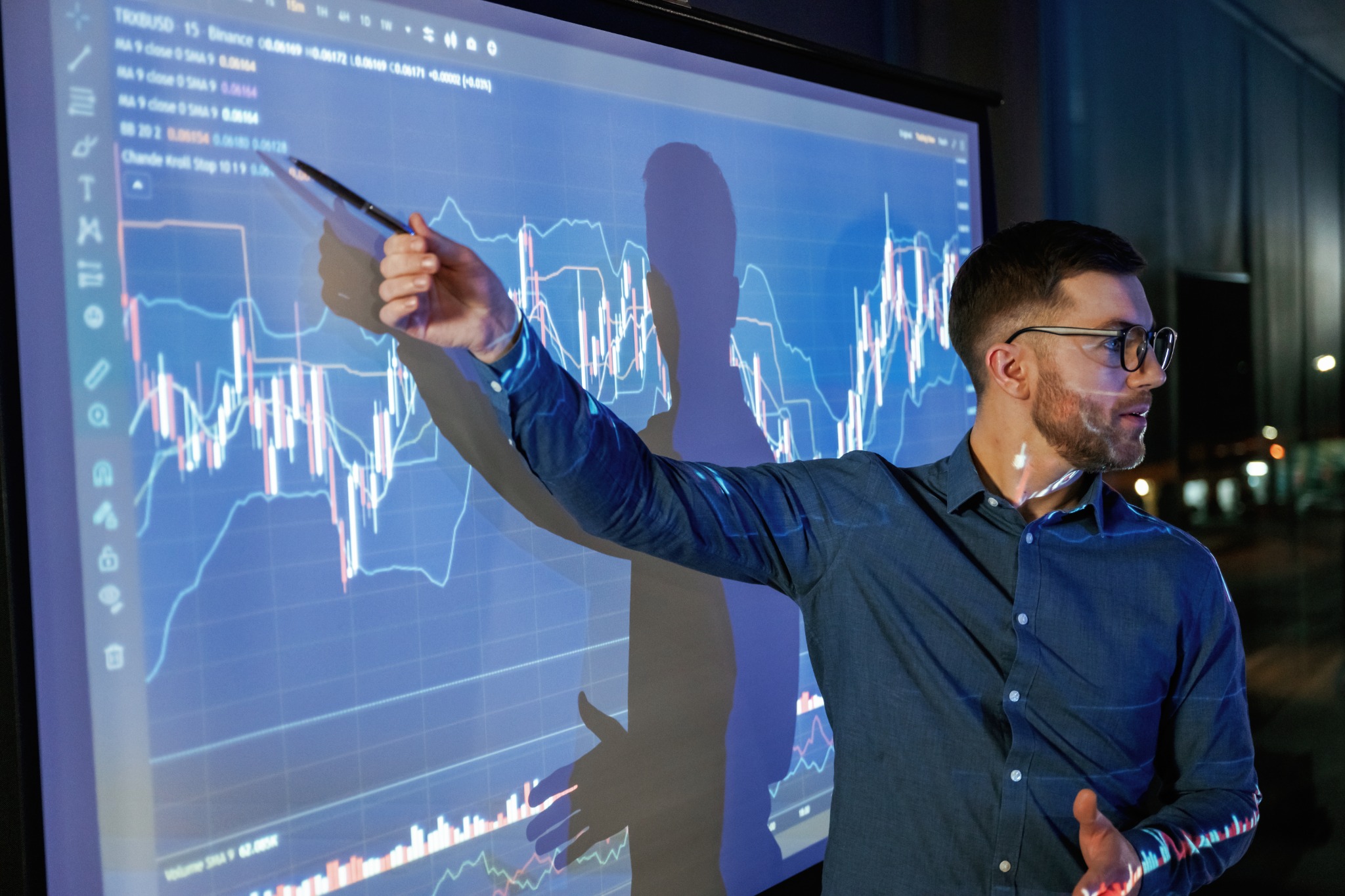
Instructor explaining analytics on a projected trading chartInstructor discussing financial data with students
Fresno and the Central Valley

Local algorithmic trading education.

VolFlow teaches in-person algorithmic trading classes in Fresno for students throughout California's Central Valley, including Clovis, Madera, Visalia, Hanford, and Merced.

Classes focus on building and understanding a complete execution system. Students learn strategy rules, backtesting, brokerage selection, live market data connections, paper validation, order execution, risk controls, and system monitoring.

Questions about classes?
202-430-6217 · isaac@volflowtrades.com

Automated trading systems and EAs

What automated trading systems and Expert Advisors have in common

VolFlow does not teach platform-specific Expert Advisor development. The course teaches students how to build brokerage-connected algorithmic trading systems. Expert Advisors, often called EAs, use many of the same core ideas: written rules, automatic market monitoring, consistent order handling, and strategy testing.

These shared principles are useful whether someone is researching an EA, a trading bot, or a broader automated trading strategy.

01

Emotion-free execution

A system follows written rules without changing a decision because of fear, greed, fatigue, or hesitation.

02

Continuous monitoring

It can watch the market during the hours supported by the selected market and brokerage. Some EA markets operate 24 hours a day, five days a week.

03

Speed and precision

When the defined conditions are met, the system can respond and send orders consistently without waiting for a person to react.

04

Backtesting

The same rules can be tested against historical data before the system moves to paper trading and, after validation, live execution.

Ready to begin?

Choose a class and start building.

Pick an available date or request a time that works for you.

Choose your class
Questions

Basic information

Do I need coding experience?

No. The class is designed as a guided build. You should be comfortable using a laptop and following technical instructions.

Does the course teach Expert Advisor development?

No. We do not teach platform-specific EA development. We teach brokerage-connected algorithmic trading systems that use many of the same principles as EAs and other trading bots.

Is this a general learn-to-trade course?

The course teaches trading through clear, testable rules. It is focused on algorithmic systems rather than discretionary signals or promises of quick profits.

What should I bring?

Bring a laptop and access to ChatGPT or Claude. Brokerage login information and API credentials should remain private.

Will the system be capable of live execution?

Yes, that is the goal. Paper trading is used to validate the system first. Live brokerage execution requires an eligible account, approved API access, private credentials, and completed safety checks.

For educational purposes only. VolFlow Trading Systems does not provide individualized investment advice. Trading involves risk, including loss of principal.

Start without paying

Create your free VolFlow account.

Explore available classes, save your information, and take the next step when you are ready.